
ERP vs. Spreadsheets: When Your Manufacturing Business Needs to Upgrade
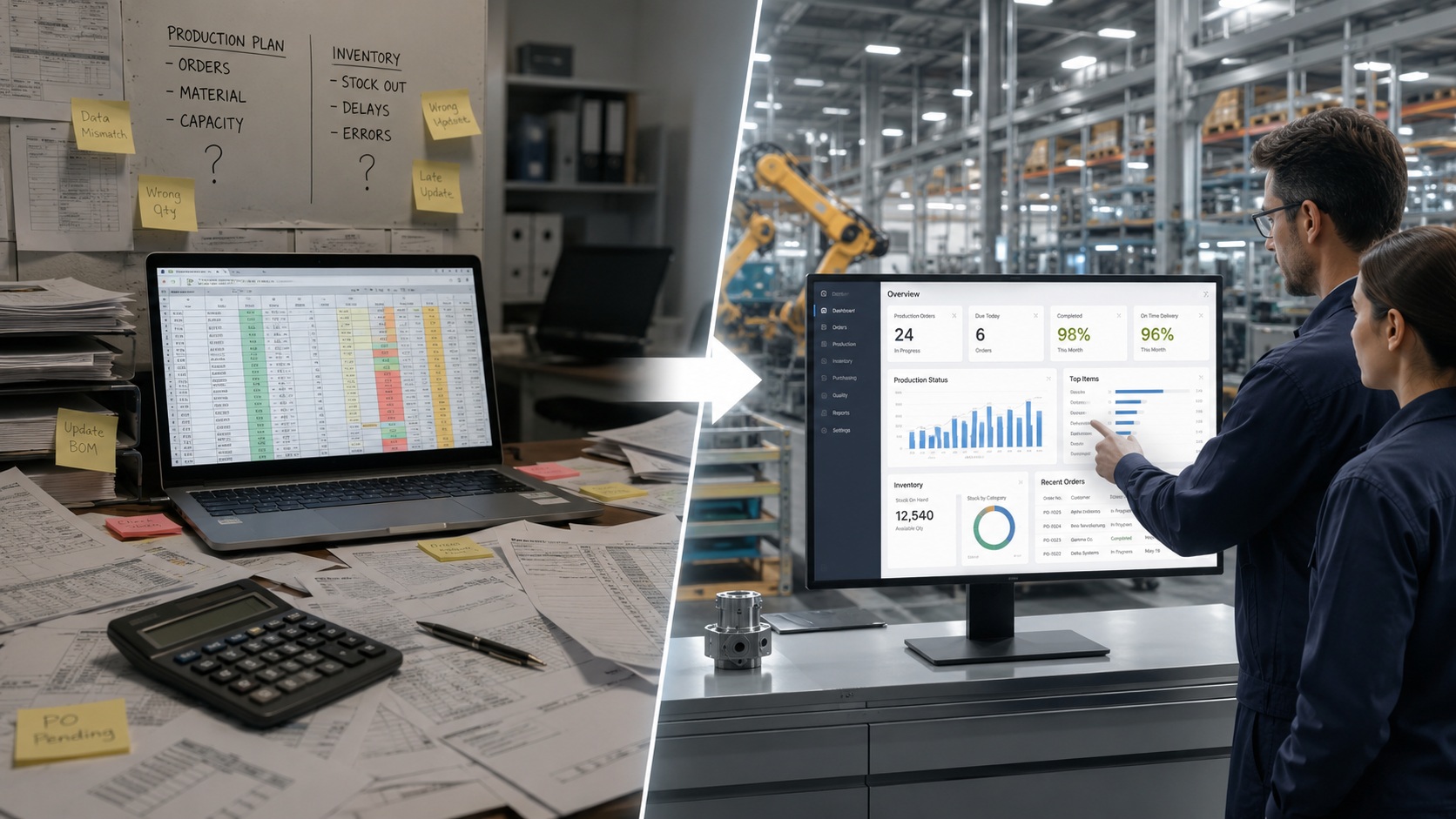
Spreadsheets are not the enemy. For a small shop with a handful of employees and a manageable order volume, a well-built
spreadsheet system can genuinely work. The problem isn't spreadsheets themselves — it's not noticing the moment they stop
working, and continuing to force them to do a job they were never designed for.
Here's how to tell where you actually stand.
The Real Cost of Staying on Spreadsheets Too Long
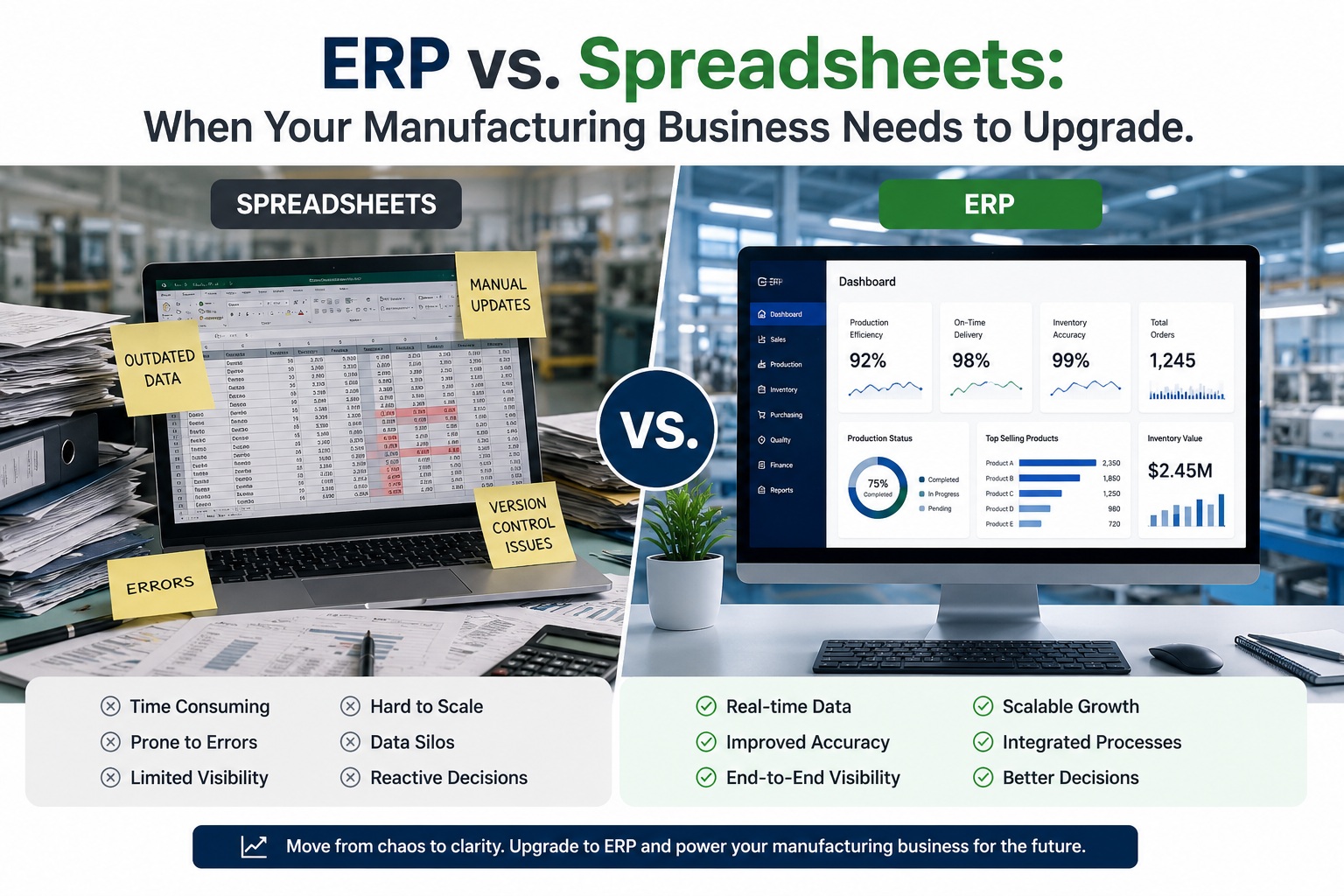
The cost isn't usually one dramatic failure. It's smaller and more constant: an order that gets double-entered and double-shipped, an inventory count that's wrong because two people updated different versions of the same file, hours spent every week reconciling numbers that should already match. Individually these look like minor annoyances. Added up over a year, they're often a meaningful hidden cost — in wasted labor, in errors that reach customers, and in decisions made on data that's already out of date by the time anyone looks at it.
Signs You've Outgrown Spreadsheets
- Multiple people edit the same file, and version conflicts are a regular headache. ("Wait, is this the current one?")
- Your inventory numbers and your actual shop floor don't match, and nobody's fully sure why.
- Quoting a job takes longer than it should** because pulling accurate cost data means checking three different files.
- You've had a real customer-facing mistake** — a wrong ship date, a missed order — traceable back to a data entry or version error.
- You're spending real hours each week on manual reconciliation that a system could do automatically.
If two or more of these sound familiar, it's worth a real conversation about next steps — not necessarily a full ERP system,
but something more than what you have now.
You Don't Have to Choose Between "Nothing" and "Full Enterprise ERP"
This is where a lot of small manufacturers get stuck: they assume the only alternative to spreadsheets is a massive,
expensive ERP implementation like the kind large enterprises run. That's not true. There's real middle ground:
- Targeted custom applications** that solve your specific worst pain point (say, shop-floor data entry or inventory tracking)
without replacing everything at once
- Right-sized MRP/ERP platforms** built for smaller manufacturers, not scaled-down versions of enterprise software
- A phased approach** — fixing the highest-cost problem first, then expanding, rather than a single high-risk "big bang" implementation
What a Good Evaluation Actually Looks Like
Before recommending any system, the right approach starts with understanding your actual processes — not a vendor demo, and not a generic checklist. That means walking the floor, understanding how orders actually move through your shop today, and identifying where the real friction is. The right system for a 15-person contract manufacturer looks nothing like the right system for a 60-person shop with multiple product lines — and a good evaluation should reflect that, not push a one-size-fits-all platform.
The Bottom Line
Spreadsheets aren't a mistake — they're often exactly the right tool at an earlier stage of a business. The mistake is not noticing when the business has outgrown them, and continuing to absorb the hidden cost of errors and lost time rather than addressing it directly.
SofTechLink helps Northeast Ohio manufacturers evaluate and implement the right ERP
and shop-floor systems for
their actual size and needs.